

How Long to Spend in Japan: The Honest Answer
By Justin Trollip Co-Founder - The Japan Concierge
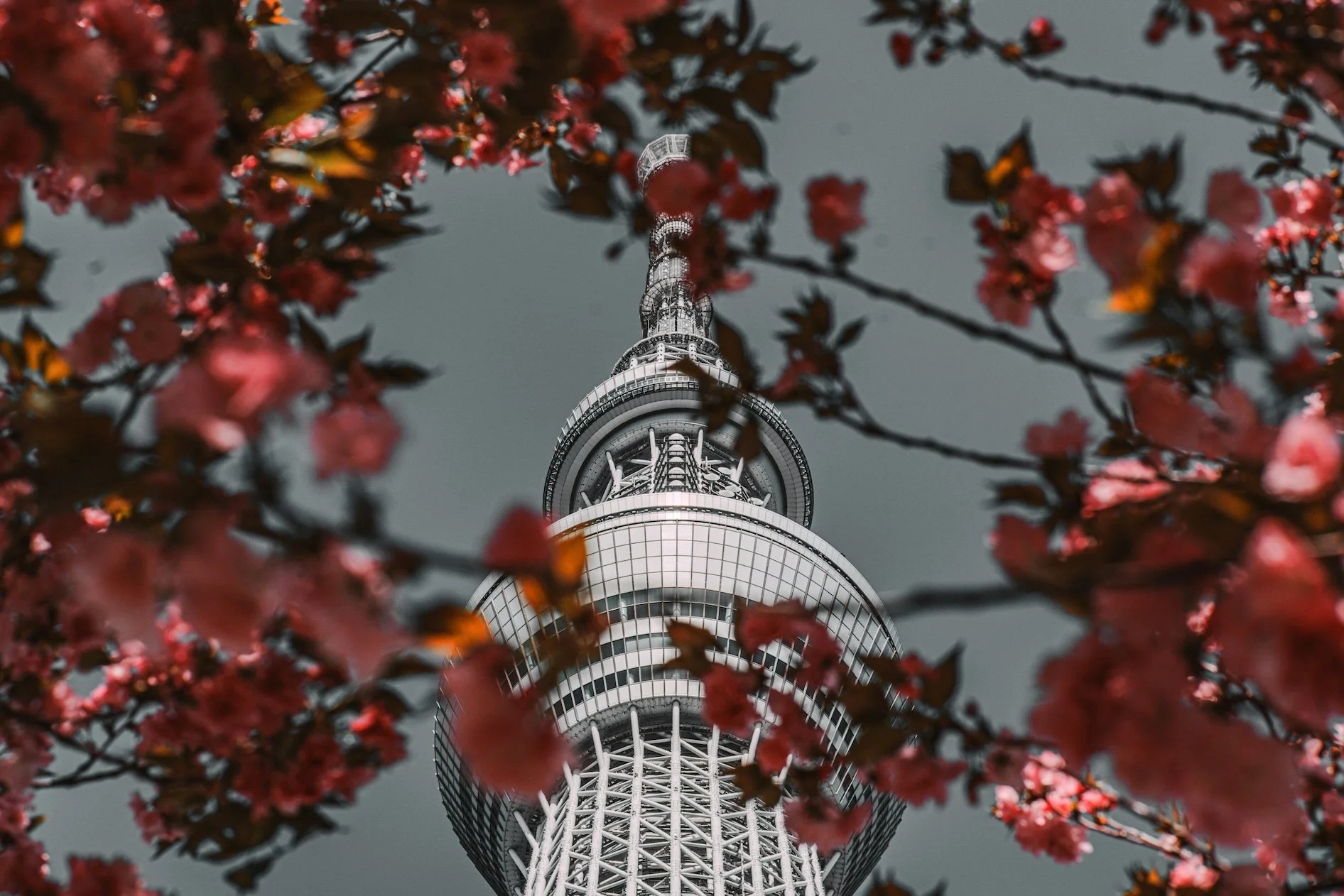
Most first-time visitors to Japan need between 10 and 14 days to cover the main destinations - Tokyo, Kanazawa, Kyoto, and Osaka - without feeling rushed.
The right length depends on how much ground you want to cover, your travel pace, and the time of year you are going. Below, we break down what you can realistically do in 7, 10, 14, and 21 days, and how to decide which is right for your trip.
Is One Week in Japan Enough?
One week in Japan is possible, but genuinely tight for your first visit. You can cover Tokyo and another city, but you will be moving quickly and may not have the opportunity to really get a feel for any of the places you visit. You will be giving up the opportunity to relax at a café and watch the locals go about their daily lives. These moments are what give you a deeper appreciation for a city, and you may not get a chance to experience these if you are trying to fit too much into your experience.
If a week is all you have, stay in Tokyo. It has more than enough to keep you busy, and 7 days will give you a real feel for the city. Which you can use when planning your next trip, because as soon as you leave, you will be planning your return trip.
One more thing a week will not do justice to: the food. Japan's regional food culture is as varied as its geography - seven days gives you 21 meals, which sounds generous until you start counting what you have not tried.
How Many Days Do You Need in Japan for a First Visit?
Ten to fourteen days is the sweet spot for a first visit. Most people are familiar with the “Golden Route” – the route from Tokyo south that incorporates stays at Hakone, Kyoto, Osaka and Hiroshima.
Our recommendation is to consider what we call the “Golden Arch” – as opposed to the much more famous Golden Route. Our preference is to suggest a trip that includes visiting Kanazawa at the expense of the more famous Hakone.
Hakone is beautiful, but it is also extremely well-travelled, and the ryokan closest to Mount Fuji now price accordingly. Kanazawa gives you the traditional Japan experience - craftsmanship, gardens, quiet machiya streets - without the premium
Kanazawa is one of our favourite destinations; it is compact, but in a good way, everything is close together. It has the historic feel of Kyoto - preserved temples, craft districts, traditional teahouses - with a fraction of the foot traffic and none of the tour groups
If you have the time, we recommend ending the trip in Hiroshima and spending a night in a ryokan in Miyajima.
The Golden Arch: Our Recommended First Visit Itinerary
Tokyo - 3- 4 days
Shopping in Ginza and the Depachika
Shibuya and the Scramble Crossing
Harajuku and the Meiji Shrine
The Historic East, Sensō-ji and Asakusa
Akihabara and Kappabashi Dori
Day trip to Nikko or Shizuoka
Kanazawa - 2 days
Kenrokuen and Kanazawa Castle
Higashi Chaya district
Omicho Market
Nagamachi
Kyoto - 3-4 days
Historic Kyoto, Nijo Castle, Philosophers ‘ Path, Gion, Kiyomizu-dera and Higashi yama
Day Trip to Nara or Hiroshima
Nishiki Markets
Arashiyama, Bamboo Groves
Fushimi Inari Temple
Osaka - 1 -2 days
Osaka Castle
Universal Studios Japan
Dotonbori and Tenjinbashi-suji
Shinsekai
Hiroshima and Miyajima - 1-2 days
Hiroshima Peace Memorial Park
Miyajima: Itsukushima Shrine, Daishoin Temple, Ryokan Stay
How Long Do You Need in Japan if You Want to Go Beyond Tokyo and Kyoto?
For travellers who want to go beyond the standard route, three weeks gives you the space to do it properly. Two weeks gets you through Tokyo, Kanazawa, Kyoto, and Osaka - the third week is where the trip becomes genuinely your own.
Kanazawa works well as a base for the surrounding region. Takayama is two hours away by express bus through the Japanese Alps, Matsumoto adds a genuine feudal castle town, and Yamanaka Onsen - one of Japan's oldest hot spring villages - is less than an hour south. None of these appear on the standard itinerary. All of them should.
Fukuoka and Kyushu justify the extra travel time for reasons that have nothing to do with the standard Japan highlights.
Fukuoka's food reputation within Japan exceeds its international profile by some distance. Tonkotsu ramen was born here, the yatai street stalls along the Naka River are unlike anything in Tokyo or Kyoto, and the city's proximity to Korea and China has shaped a food culture that feels meaningfully different from the rest of Japan.
Then there are the art Islands of Naoshima and Teshima. Naoshima and Teshima are built around a concentration of private art museums - including work by James Turrell and Walter De Maria - that would anchor a serious museum itinerary in any major city. Finding them on a small island in the Seto Inland Sea is the point.
Naoshima and Teshima are best treated as a two-day detour from Osaka or Hiroshima - the islands are small enough to cover on foot or by bicycle, and an overnight stay changes the experience entirely.
A third week changes the nature of the trip - you stop moving every two days, you return to a restaurant you liked, you take the slow train instead of the Shinkansen. Japan rewards that pace in ways a tighter itinerary cannot.
Japan Itinerary Length Suggestions
7 Days in Japan
Seven days in Japan is possible, but the honest version is this: jet lag can take a couple of days to get over, which means you will spend the first part of your trip adjusting and the last part realising how much you have not seen. If any flexibility exists to extend to ten days, take it. If seven is fixed, the itinerary below concentrates on Tokyo and Kyoto - the two cities that reward a short visit most - and leaves everything else for next time. There will be a next time.
10 Days in Japan
A ten day trip is where things start to breathe. Jet lag has cleared, the rhythm of moving around Japan has become familiar, and there is enough time to include a third city without feeling rushed through any of them. The Golden Arch route - Tokyo, Kanazawa, Kyoto - fits comfortably into ten days and exposes you to a side of Japan that the standard two-city itinerary entirely misses. If Kanazawa does not appeal, the additional days absorb easily into Tokyo and Kyoto - both cities have enough depth that you will not run out of things to discover. But the third city is worth it.
14 Days in Japan
Two weeks is the duration where Japan stops feeling like a checklist and starts feeling like somewhere you actually know. Jet lag is long gone, the rhythm of the Shinkansen is familiar, and there is enough time to linger - to return to a restaurant you liked, to sit in a garden without checking the time, to let a city show you something you did not plan to see. The Golden Arch route fits comfortably within fourteen days with room to add Osaka, which earns its place as Japan's most committed eating city and a genuinely different register from either Tokyo or Kyoto. The itinerary loops back to Tokyo at the end - partly to cover the neighbourhoods that did not fit in the first leg, and partly because Tokyo's international connections make it the most practical departure point for most travellers.
21 Days in Japan
The destinations and pacing for a three-week trip are covered in the section above. At that length, the itinerary becomes genuinely personal - the structure above is a starting point, not a prescription.
How Does the Time of Year Affect How Long You Need?
Peak season adds time to any Japan itinerary - not because there is more to see, but because everything takes longer and flexibility becomes essential. Shinkansen luggage-reservation seats between Tokyo and Kyoto can only be booked 30 days before travel, are limited in number, and sell out quickly during cherry blossom and Golden Week.
The same principle applies to restaurants and experiences. The volume of visitors all trying to do the same things at the same time means that your preferred restaurant or activity may not be available on the date you want.
Building two or three buffer days into a peak-season itinerary is not padding – it is a good approach to make sure you get to visit those hard-to-secure reservations.
The peak periods that you need to be aware of are:
Cherry Blossom Season - runs from late March through to mid-April, though the timing is not fixed. Bloom starts in the south and moves north as temperatures rise - Kyushu and Tokyo typically peak before Kyoto, which peaks before Tohoku and Hokkaido.
Golden Week is Japan’s busiest holiday period, it happens in late April and clusters 4 national holidays into a single week. This is the time when the Japanese travel extensively across Japan either to visit family or to visit different parts of Japan
Autumn foliage Mid to late November, similar to Cherry Blossom Season, this is a time of year when both domestic and international visitors will visit areas known for their fall foliage
Snow Season, Japan has some of the best snow in the world and many people will visit during the peak from January through to the end of February. This only has implications if you plan on visiting snow regions but be aware of additional demand for Shinkansen to Nagano, flights to Hokkaido as well as accommodation in the cities. Airlines also take advantage of this period, so you could end up paying a premium for flights.
Lunar New Year – Much like Golden Week but for visitors from Asia. This is a peak travel period for visitors from China and other countries that observe the Lunar calendar. These visitors tend to travel for Snow experience but are not limited to the colder climes of Japan. This drives up demand (for everything) significantly along with prices for accommodation.
Is Japan Worth Visiting for Less Than a Week?
Japan is worth visiting for any length of time and we have on occasion, had the odd city break in Tokyo - 4 nights minimum, with a rigid sleep plan and not as first time. It does, sadly, become a trade-off between the cost and time involved in getting to Japan and how much you are realistically going to be able to experience. If you only have 5 or 6 days and you are comfortable with knowing you may be spending some of the time on ground working through jet lag, then yes do it but just stay in one city. Save the rest for next time.
Trip length is the first decision that shapes everything else, get it wrong and even a great itinerary feels rushed. If you are still working out how long to go for, get in touch before you book flights. That conversation is free and it will save you from decisions that are not (free, that is).
Start planning your Japan trip
FAQ Section
How many days do most tourists spend in Japan?
Most international visitors spend between 10 and 14 days in Japan. Ten days covers the core Golden Arch route - Tokyo, Kanazawa, Kyoto, and Osaka - without feeling rushed. Fourteen days is the sweet spot for a first visit, allowing enough time for the pace to slow, for a restaurant to be revisited, and for jet lag to become a distant memory rather than a daily companion.
Is 10 days enough for Japan?
Ten days is enough for a genuinely satisfying first visit. The Golden Arch route - Tokyo, Kanazawa, Kyoto - fits comfortably within ten days and covers more ground than the standard Golden Route without feeling compressed. You will not see everything, but you will see enough to understand why most people who visit Japan once end up planning a return trip before they leave.
Is 2 weeks in Japan too long?
Two weeks in Japan is not too long - it is closer to the ideal. Fourteen days is where the trip stops feeling like a checklist and starts feeling like somewhere you actually know. It allows time to add Osaka to the Golden Arch route, to take a day trip without sacrificing a major sight, and to spend a morning doing nothing in particular. Japan rewards that pace.
How long should I spend in Tokyo?
Three to four days is the minimum for Tokyo on a first visit, and four to five days is better if the itinerary allows it. Tokyo is not one city but many layered on top of each other - Shibuya, Asakusa, Shimokitazawa, Yanaka, and Nakameguro each have a completely different character. A week in Tokyo alone is not excessive, and many travellers return specifically to explore the neighbourhoods they missed the first time.
How long should I spend in Kyoto?
Three days is the workable minimum for Kyoto, and four days is more comfortable. Kyoto divides naturally into geographic clusters - the historic east around Gion and Kiyomizu-dera, north Kyoto around Kinkaku-ji and Ryoan-ji, and Arashiyama to the west. Trying to cover all three in two days is possible but leaves no time for the unhurried morning in a temple garden that Kyoto does better than anywhere else in Japan.
Can I see Japan in 5 days?
Five days in Japan is possible but significantly limited. Jet lag from a long-haul flight typically takes two to three days to clear, which means a five-day trip is effectively a two or three-day trip by the time you feel like yourself. If five days is unavoidable, stay in Tokyo. It has more than enough to fill the time and attempting to add Kyoto means spending a meaningful portion of your trip on trains rather than in either city.
How long does it take to travel from Tokyo to Kyoto?
The Shinkansen from Tokyo to Kyoto takes approximately two hours and fifteen minutes on the Nozomi, which is the fastest service. The Hikari takes closer to two hours and forty minutes and is the service that JR Pass holders can use. Both depart regularly from Tokyo Station. The journey itself - crossing the Japanese countryside at 285 kilometres per hour - is worth treating as part of the experience rather than something to sleep through.
Is Japan a good destination for a long trip?
Japan is an exceptional destination for a long trip, and arguably one that reveals itself more fully the longer you stay. Beyond the standard route of Tokyo and Kyoto, the country has extraordinary regional variety - the food culture of Fukuoka, the art islands of the Seto Inland Sea, the onsen villages of the Japanese Alps, the powder snow of Hokkaido. Three weeks in Japan still leaves significant territory unexplored.
What is the minimum time needed to visit Japan properly?
Ten days is the minimum for a trip that feels complete rather than compressed. Anything shorter means spending a disproportionate amount of time in transit and recovering from jet lag. Seven days is possible for a focused visit to Tokyo and Kyoto, but the honest version is that you will spend the first part of your trip adjusting and the last part realising how much you have not seen. Ten days changes that equation meaningfully.